
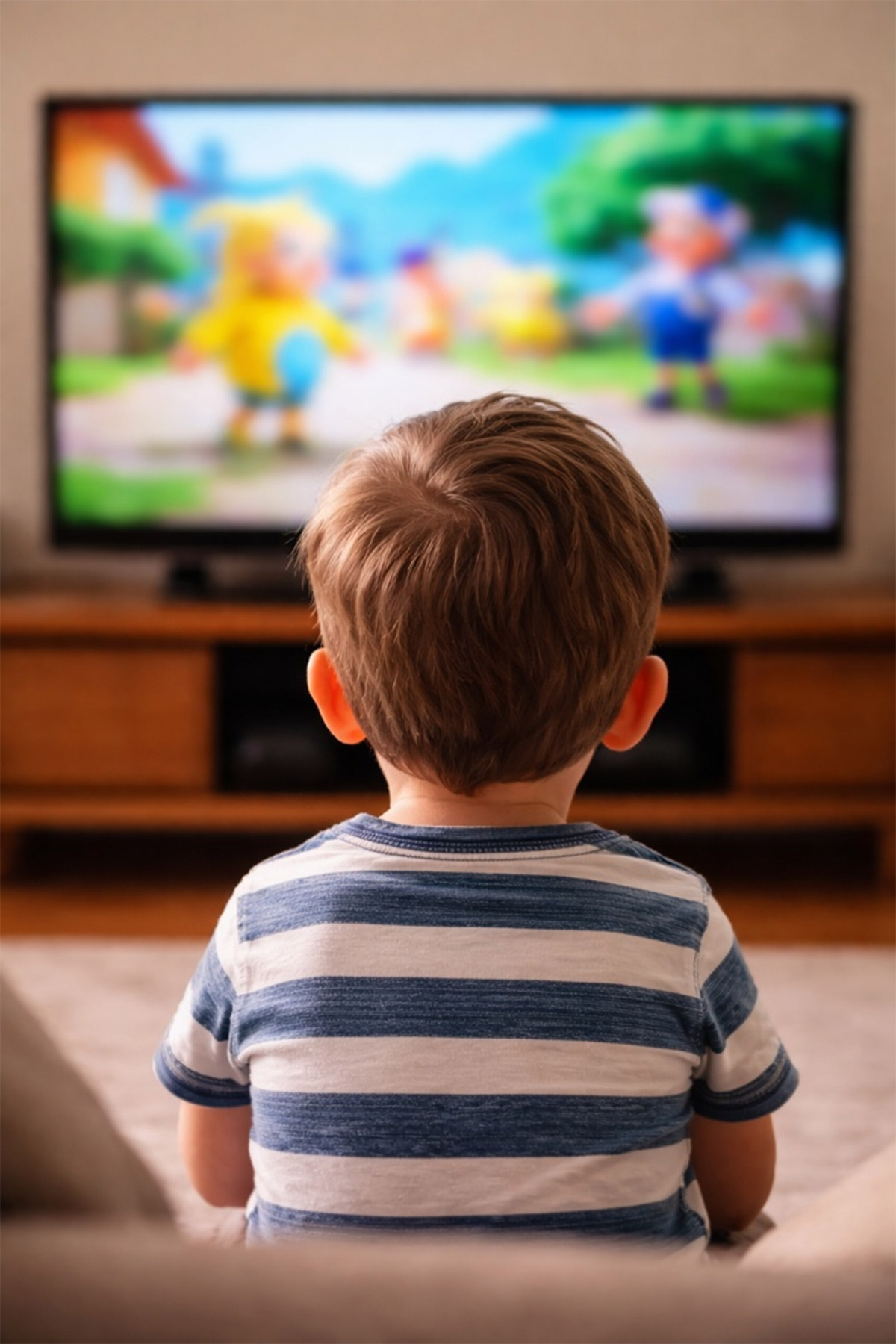
In today’s digital world, televisions, smartphones, and tablets are part of everyday family life. For many parents, screens can offer a much-needed moment to pop dinner on, take a wee breather, or to wind down an overtired child after a busy day.
Rather than approaching the topic of screen use with guilt or judgement, current research encourages us to think more intentionally about how, when, and how much screen time young children experience. Early childhood is a time of rapid brain development, where everyday experiences play a powerful role in shaping children’s learning, behaviour, and wellbeing.

What the research tells us
During the formative preschool years, the brain is busy building neural connections that support attention, language, problem-solving, and emotional regulation. Well know studies shows that higher levels of screen time for preschoolers are associated with differences in executive functioning skills such as working memory, impulse control, and cognitive flexibility — all of which are strongly linked to learning readiness.
When screen time replaces play, conversations with others, and hands-on exploration, children may miss important opportunities for important things such as language, social development, and relationship-building. Higher levels of screen use in the early years have also been linked to an increased likelihood of behaviour concerns, developmental or language delays, attention difficulties, anxiety, disrupted sleep, and changes in mood.
What the studies show us is that high levels of screen time for preschoolers are associated with increased likelihood of behaviour concerns, developmental/language delays, attention difficulties, and anxiety. It can be disruptive to sleep and mood, and there is also growing discussion around habit forming/addiction of screens where rapid-reward features in apps can encourage repeated use and make it harder for young children to disengage from their device. While this does not mean every child will develop screen addiction because they have had some screen time in their early years, it highlights the importance of guided, intentional use — especially during the early years.
Screen time guidelines
Current guidelines recommend that children under five years of age have no more than one hour of screen time per day.
It is also important to consider when screens are used. Blue light exposure from devices disrupts natural melatonin production — the hormone that helps us fall asleep — so we strongly recommend avoiding screens for at least one hour before bedtime.
A balanced and realistic perspective
A balanced perspective should include that it is important to recognise that screens are not always harmful. Educational programmes, guided co-viewing shared viewing with an engaged adult, or interactive communication with whānau can support learning when used intentionally.
Some neurodivergent children, for example, may benefit from visual supports, predictable digital routines, or carefully chosen structured learning apps that complement communication or therapy goals. When adults stay involved — talking about what children are see, asking questions, and connecting content to real-life experiences — screens can become a shared learning tool rather than a passive activity.
Safety matters too
Digital safety is another key consideration. Young children are not yet able to reliably distinguish safe from unsafe content. Open, unrestricted platforms can expose children to inappropriate material or advertising-driven content.
Using age-appropriate platforms, parental controls, and supervised viewing helps reduce these risks and keeps digital experiences aligned with children’s developmental needs.
Our approach at Nurture@Home
At Nurture@Home, our approach to screens is centred on prioritising hands-on exploration, relationships, play, and real-world learning.
Our service is screen-free for everyday care, meaning children are not seated in front of televisions or tablets for entertainment while attending care with their Educator.
On very rare occasions — such as a short guided preschool yoga session or a special themed event like a cosy winter pyjama day (with whānau permission) — Educators may briefly use a screen as an interactive or instructional tool. They may also share preschool appropriate music with the children via a device. Otherwise, learning takes place through conversation, movement, creativity, outdoor play, and meaningful play and connections.
Supporting families, not striving for perfection
Parenting in a modern world is demanding, and occasional screen use can be a helpful support during busy times. What matters most is not perfection, but balance — using screens intentionally rather than automatically, and ensuring children have daily opportunities to experience conversations, outdoor play, and rest.
When children grow up surrounded by responsive relationships and rich, real-world experiences, they develop strong foundations (brains) for lifelong learning, wellbeing, and confidence.